
Management Innovations symbol

MANAGEMENT INNOVATIONS

Vision to Implementation

Operating workbook

Map the drag. Redesign the loop.

Use the workbook to trace follow-up in both directions, identify the highest-friction loops, and define the agreements and visibility that will remove them.

How to use it

This is a working management tool, not a reflection exercise. Use it to convert the NFR philosophy into live agreements, calendar discipline, and measurable behavior change.

Workbook reset

Give the workbook the whole stage.

The workbook should feel spacious, practical, and lightly visual. It is where leaders do the hard thinking that turns NFR from a belief into a working system.

Full-screen working canvas for live operating redesign.
Guided start, burden pulse, and top-loop prioritization.
Built for real conversations with peers, reviewers, and sponsors.

Ground rules

Use current relationships, current pressure, and current follow-up loops. This page should help a leader work on reality, not on a neat fictional example.

Tone

Serious in purpose, but not gloomy in feel. The workbook should reduce cognitive drag, not add to it.

Workbook view

Move from reminder traffic to clear flow.

This workbook works best when it feels like an operating room, not a filing cabinet. Use it to see the relationships, redesign the rules, and make trust visible.

Map the real burden, not just the memorable incidents.
Choose the loops that most damage time, pace, and trust.
Replace vague follow-up with operating agreements and early visibility.

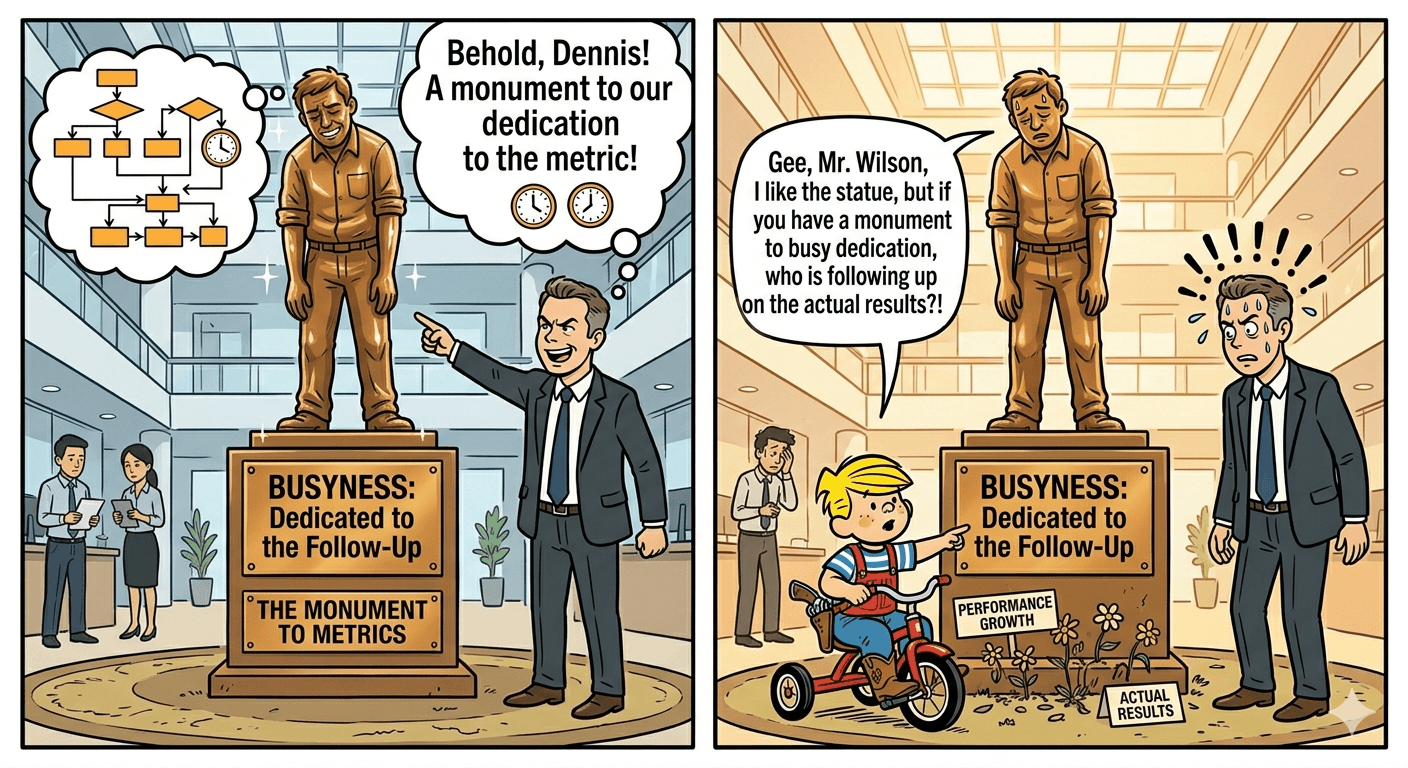
Comic relief

Serious topic. A little oxygen helps.

The humor is respectful, but it helps leaders recognize familiar follow-up patterns faster and with less defensiveness.

The ASAP trap

"ASAP" is not a date. It is tomorrow's follow-up.

Humor helps here because vague urgency is one of the oldest repeat offenders in management.

The CC storm

If seven people are copied, trust has probably left the room.

The email grows because confidence in direct ownership has already weakened.

The calendar miracle

A promise without time blocked is a motivational speech.

Calendar discipline looks boring until it saves an important commitment.

NFR leader workbook

Map the drag. Redesign the relationship.

Use the Management Innovations workbook logic to map where follow-up still exists, quantify the burden, and redesign each relationship through process fixes, agreements, update rhythms, check-ins, and eventual NFR declaration.

Mapped loops

0

Weekly follow-ups

0

Monthly follow-ups

0

Entries save on this device

Guided start

01

Map both directions

List the people you still follow up with and the people who still follow up with you. NFR begins with an honest two-way picture.

02

Choose the top three loops

Prioritize the relationships that create the greatest drag on leadership time, trust, or operating speed.

03

Design the fix

For each high-value loop, define the system fix, SLA, promise, update rhythm, and check-in path that should remove the need for chasing.

Burden pulse

The burden appears balanced across both directions. Look for the most expensive loops rather than assuming the issue sits only on one side.

You follow up0
Others follow up with you0

Top live loops

Once you begin mapping named relationships, the most active loops will appear here for faster prioritization.

Workbook rules

Map both directions of follow-up: who you chase and who chases you.
Record topic and frequency so the burden becomes visible, not anecdotal.
Design process, data flow, automation, SLA, promise, and update solutions, not better reminders.
Set discussion dates, finalization dates, and staged check-ins so redesign becomes real work.
NFR status is strongest when the other person declares it, not when you claim it.

Leadership synthesis

Where I follow up

Map the people and workflows you still need to follow up with. This is where unclear expectations, weak systems, and avoidable dependence are consuming leadership attention.

Operating zone

Within my team

5 relationships

Relationship 1

Not yet mapped

Weekly: 0Monthly: 0

Add the follow-up topic, then define the redesign below.

Relationship 2

Not yet mapped

Weekly: 0Monthly: 0

Add the follow-up topic, then define the redesign below.

Relationship 3

Not yet mapped

Weekly: 0Monthly: 0

Add the follow-up topic, then define the redesign below.

Relationship 4

Not yet mapped

Weekly: 0Monthly: 0

Add the follow-up topic, then define the redesign below.

Relationship 5

Not yet mapped

Weekly: 0Monthly: 0

Add the follow-up topic, then define the redesign below.

Operating zone

Across departments

10 relationships

Relationship 1

Not yet mapped

Weekly: 0Monthly: 0

Add the follow-up topic, then define the redesign below.

Relationship 2

Not yet mapped

Weekly: 0Monthly: 0

Add the follow-up topic, then define the redesign below.

Relationship 3

Not yet mapped

Weekly: 0Monthly: 0

Add the follow-up topic, then define the redesign below.

Relationship 4

Not yet mapped

Weekly: 0Monthly: 0

Add the follow-up topic, then define the redesign below.

Relationship 5

Not yet mapped

Weekly: 0Monthly: 0

Add the follow-up topic, then define the redesign below.

Relationship 6

Not yet mapped

Weekly: 0Monthly: 0

Add the follow-up topic, then define the redesign below.

Relationship 7

Not yet mapped

Weekly: 0Monthly: 0

Add the follow-up topic, then define the redesign below.

Relationship 8

Not yet mapped

Weekly: 0Monthly: 0

Add the follow-up topic, then define the redesign below.

Relationship 9

Not yet mapped

Weekly: 0Monthly: 0

Add the follow-up topic, then define the redesign below.

Relationship 10

Not yet mapped

Weekly: 0Monthly: 0

Add the follow-up topic, then define the redesign below.

Operating zone

External partners

10 relationships

Relationship 1

Not yet mapped

Weekly: 0Monthly: 0

Add the follow-up topic, then define the redesign below.

Relationship 2

Not yet mapped

Weekly: 0Monthly: 0

Add the follow-up topic, then define the redesign below.

Relationship 3

Not yet mapped

Weekly: 0Monthly: 0

Add the follow-up topic, then define the redesign below.

Relationship 4

Not yet mapped

Weekly: 0Monthly: 0

Add the follow-up topic, then define the redesign below.

Relationship 5

Not yet mapped

Weekly: 0Monthly: 0

Add the follow-up topic, then define the redesign below.

Relationship 6

Not yet mapped

Weekly: 0Monthly: 0

Add the follow-up topic, then define the redesign below.

Relationship 7

Not yet mapped

Weekly: 0Monthly: 0

Add the follow-up topic, then define the redesign below.

Relationship 8

Not yet mapped

Weekly: 0Monthly: 0

Add the follow-up topic, then define the redesign below.

Relationship 9

Not yet mapped

Weekly: 0Monthly: 0

Add the follow-up topic, then define the redesign below.

Relationship 10

Not yet mapped

Weekly: 0Monthly: 0

Add the follow-up topic, then define the redesign below.

Ground rules

What makes the workbook useful

These principles keep the workbook disciplined, evidence-based, and practical enough for live management use.

Map both directions of follow-up: who you chase and who chases you.
Record topic and frequency so the burden becomes visible, not anecdotal.
Design process, data flow, automation, SLA, promise, and update solutions, not better reminders.
Set discussion dates, finalization dates, and staged check-ins so redesign becomes real work.
NFR status is strongest when the other person declares it, not when you claim it.

30-day cadence

Week 1

Audit the drag

Read the NFR playbook, align with peers, and map the top follow-up scenarios against the pillars and the real cost of follow-up.

Week 2

Build agreements and systems

Design the essential SLAs, promises, and visible systems that can reduce dependence and unnecessary reminders.

Week 3

Lead from the calendar

Convert commitments into real calendar architecture and establish a practical review rhythm before deadlines break.

Week 4

Run and review

Run the first implementation cycle, gather stakeholder feedback, and refine the NFR system with check-ins and peer review.

Supporting habits

Drop vague language

Remove terms like 'soon' and 'ASAP' and replace them with explicit dates, times, and completion logic.

Communicate early

Share progress and risk before people ask. If a deadline is at risk, notify stakeholders at least 48 hours in advance.

Use visible tools

Use shared dashboards, automated reminders, SLA templates, and visible calendars to maintain a trusted source of truth.